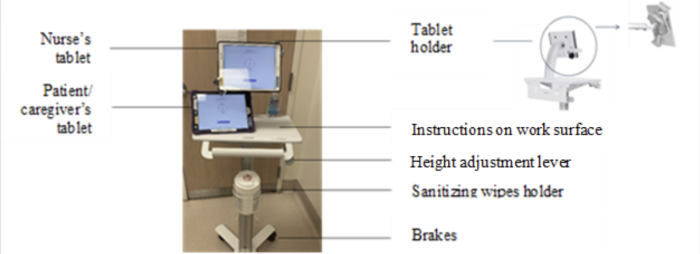
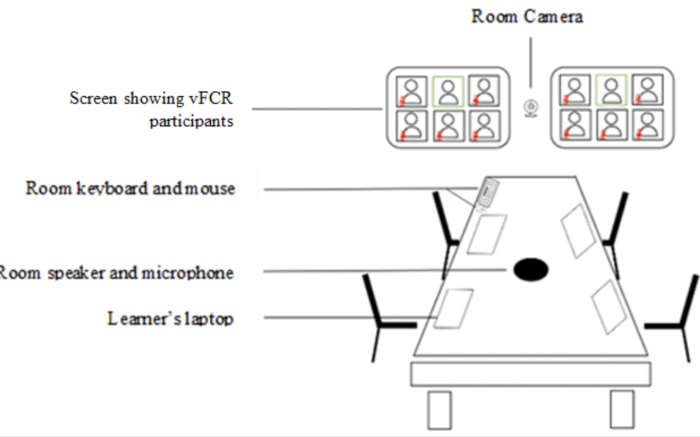
There is a body of literature highlighting the benefits and challenges experienced by organizations implementing family-centred rounds. Successful implementation processes will vary, but here we provide general recommendations and examples of how each impacted implementation at our own hospital.
We gratefully acknowledge the team at the University of Wisconsin for their work and sharing of implementation principles for family-centred rounds.
Strong Hospital Leadership Commitment and Support
The involvement of organizational leaders (administrative and clinical) is key in order for the project to be prioritized and supported with resources. Ongoing support is critical for sustainability. Hospital leadership should be engaged as early as possible.
Support for vFCR by our IMT (Incident Management Team) was crucial for securing human resources (ie. quality improvement support, auditors) and procuring available technology in order to quickly develop and implement vFCR.
Multidisciplinary Stakeholder Participation
Engaging all stakeholder groups is essential for development of useable vFCR processes and technology, as well as a major factor for successful implementation and adoption. Stakeholders should be involved in the development of workflows, roles and responsibilities, equipment/technology selection and configuration and testing phases. Communication strategies should be developed to ensure active and meaningful participation by all stakeholder groups.
Our multidisciplinary project team included front line staff and patient and family representatives who were key players in identifying improvement opportunities during the project phase (ie. using headset splitters instead of tablet speakers).
We involved the IT team (privacy/cybersecurity, business systems and technical analysts) early and often to identify appropriate and available devices and technology that could facilitate reliable and secure video connections within our facility, to support testing, trouble-shooting and iterative development of technical solutions.
Example of a Multidisciplinary Implementation Team:
- Physicians
- Staff nurses
- Nurse manager/educator
- Health professional leads
- Resident/learner representatives
- Patient and family representatives
- Quality improvement and/or human factors experts
- Project Manager/coordinator
An Implementation Plan and Timeline
A well thought-out implementation plan will ensure all stakeholders are able to meaningfully participate in the iterative design process and project implementation phases. A plan is necessary for your implementation to remain organized, structured and managed, and ensures clear communication of expectations to the implementation team and stakeholders. Consider including the following:
- Timeline of major steps
- Development of metrics (ie. outcome, process, balancing)
- Collection of baseline data
- Usability Testing & Simulation
- Training
- Piloting vFCR
- Iterative improvement cycles
Communication & Training
Training on vFCR process and technology is essential to success. The cognitive load involved in implementing a new workflow while caring for patients in a high-acuity environment cannot be understated. Successful change management is dependent on all stakeholder groups feeling prepared and proficient with the technology and coordination required to efficiently and effectively round virtually. Achieving this level of comfort is particularly challenging given the constant rotation and turnover of staff in hospitals. This toolkit provides multiple resources to ensure appropriate training for all vFCR participants. However, additional training opportunities, such as hands-on equipment review and simulation, may be required to ensure staff are well prepared.
We faced numerous challenges due to high staff turnover and the importance of training was highlighted in our process/technology evaluation study. We found that inefficiencies and frustrations were associated with lack of familiarity with vFCR process and/or technology setup and could be easily alleviated with a short hands-on training session.
Transition from Project to Operations
Embedding vFCR into the day-to-day operations of your organization is key. This requires training and mentorship of clinical leaders who will oversee this process and ensure its ongoing success.
Transitioning oversight of vFCR from the project team to nursing care facilitators (ie. charge nurses) allowed vFCR to run for 18+ months during the COVID-19 pandemic and freed up project team members to focus on other work.
Oversight and monitoring of virtual family-centred rounds was transitioned to our Inpatient Patient Care Leadership Team.
Continuous Evaluation, Improvement and Sustainability
A plan for continuous evaluation of vFCR is necessary to provide feedback to vFCR project owners and to support sustainability. Ensuring pre-established metrics are being reviewed by leadership teams is essential for accountability and opportunities for further improvement. Alignment with hospital/corporate priorities is key to ensuring the long-term sustainability and viability of vFCR within your organization.
Our virtual family-centred rounds project closely aligned with our hospital’s “virtual-first” COVID-19 pandemic strategy.