Mental health services at CHEO

CHEO is one of the largest providers of mental health services in Ontario for youth and their families. Our mental health program provides a broad range of services in schools and the community as well as day treatment programs and inpatient care when needed.

Access CHEO Mental Health services

There are three ways that clinicians, mental healthcare providers, schools, patients, and families can access CHEO's Mental Health services:

Children and youth (up to 17 years) experiencing a mental health crisis can access CHEO's Mental Health Services through the hospital Emergency department.

Children and youth will be seen by a crisis team member and/or an emergency room physician. These specialists will provide medical and mental health assessments as needed. The assessment will determine if the child or youth needs to be immediately admitted to the hospital's mental health unit, referred to one of our outpatient mental health program or to a community-based service or specialist.

To learn more about CHEO's specialized services, please read the list of specialized CHEO Mental Health Services below.

Children, youth, families and health-care providers can now connect, request information and book referrals for CHEO mental health services through 1Call1Click.ca.
1Call1Click.ca is a new bilingual service designed to match children, youth and families living in Eastern Ontario with the right mental health and addiction services, at the right time. An initiative of the Kids Come First Health Team, 1Call1Click.ca is the first of its kind in Ontario and brings together 33 local providers of child and youth mental health and addiction services.

CHEO mental health services

Below is a complete list of all mental health services and programs available at CHEO.

Emergency department and Mental Health Services

About these services:

Children experiencing a mental health crisis and arriving at the hospital Emergency department will be seen either by a Crisis Intervention Worker or an Emergency room physician. These specialists will provide a medical and psychological assessment. The assessment will determine if the child needs to be immediately admitted to the hospital's mental health unit, referred to one of CHEO's outpatient mental health program or referred to a service or specialist in our community.

Address:

CHEO
401 Smyth Rd,
Ottawa, ON K1H 8L1

By bus:

OC Transpo buses run across Ottawa. Visit their website to plan your trip, find out about what routes are available and more. There are currently two routes that stop in front of CHEO's main campus: route 45 and route 55.

You can also call OC Transpo's information line at 613-741-4390 for schedule details.

When the child or teen arrives at CHEO's Emergency department, they will meet a triage nurse, who will ask about the reason for their visit. The nurse will assess how urgent the situation is, and decide if the child or teen needs medical treatment right away. After seeing the triage nurse, a Crisis Intervention Worker or Emergency Physician will meet with the child or teen, as well as parents and guardians to try to understand the situation, and everyone's concerns. We may speak with the child or teen separately, as needed. The child or teen will be assessed for safety, mental health issues, and provided with medical treatments if needed. Most children and youth go home after their assessment in the Emergency Department. The Crisis Intervention Worker or Emergency Physician will discuss safety concerns and a follow-up plan with the youth and family before they leave. If the child or teen is admitted to hospital, we will provide information on next steps.

Urgent Mental Health Services

About these services:

The Urgent Care clinic provides assessment and consultation for children and youth up to 17 years old who have urgent mental health needs such as suicidal behaviour or an abrupt decrease in mood or functioning. The urgency or severity of need determines the priority for treatment. Patients are assessed and diagnosed by psychiatrists and psychologists with particular attention to safety and risk. If required, recommendations for follow-up care and treatment will be made.

Children, youth, families and health-care providers can now connect, request information and book referrals for CHEO mental health services through 1Call1Click.ca.
1Call1Click.ca is a new bilingual service designed to match children, youth and families living in Eastern Ontario with the right mental health and addiction services, at the right time. An initiative of the Kids Come First Health Team, 1Call1Click.ca is the first of its kind in Ontario and brings together 33 local providers of child and youth mental health and addiction services.

Mental Health Inpatient Services

About these services:

What we do

Inpatient services include a unit for children and youth aged 17 and under and offers psychiatric medical services and therapy for children and families. The goal of the psychiatric inpatient unit is to provide family-centered care and crisis stabilization, as well as appropriate linkage to ongoing services that meet the needs of the youth and the family.

Most inpatient stays are either:

  • 24 to 48 hours, for those who need short-term support to resolve a crisis; OR
  • A few days or more, for those whose mental health difficulties need to be assessed and diagnosed, and treatments recommended.

How to access

Children, youth, families and health-care providers can now connect, request information and book referrals for CHEO mental health services through 1Call1Click.ca.
1Call1Click.ca is a new bilingual service designed to match children, youth and families living in Eastern Ontario with the right mental health and addiction services, at the right time. An initiative of the Kids Come First Health Team, 1Call1Click.ca is the first of its kind in Ontario and brings together 33 local providers of child and youth mental health and addiction services.
Children, youth, families and health-care providers can now connect, request information and book referrals for CHEO mental health services through 1Call1Click.ca.
1Call1Click.ca is a new bilingual service designed to match children, youth and families living in Eastern Ontario with the right mental health and addiction services, at the right time. An initiative of the Kids Come First Health Team, 1Call1Click.ca is the first of its kind in Ontario and brings together 33 local providers of child and youth mental health and addiction services.

Mental Health Outpatient Services

About these services:

Our multidisciplinary team offers services including individual, family and group therapy for children and youths who have serious, ongoing mental health concerns. We provide assessments and treatment for children and youth who are struggling to function in school, community and at home.

Children, youth, families and health-care providers can now connect, request information and book referrals for CHEO mental health services through 1Call1Click.ca.
1Call1Click.ca is a new bilingual service designed to match children, youth and families living in Eastern Ontario with the right mental health and addiction services, at the right time. An initiative of the Kids Come First Health Team, 1Call1Click.ca is the first of its kind in Ontario and brings together 33 local providers of child and youth mental health and addiction services.

CHEO programs for youth and young adults

About these services:

What we do

The primary goal is to support youth (16-24 years) in successfully transitioning from child and youth mental health services to adult mental health services which will meet their needs. Transition and change can be very stressful! Connecting with new services and care providers can feel overwhelming! Transition services can help you navigate this process and provide education, preparation, planning and tools to make the transition easier.

Who we see

The Transitional Age Youth program is designed to meet the mental health needs of youth aged 16-24 who have complex mental illness and exhibit a need for a high level of service to be successful in the community. However, youth will developmental disabilities may be best assisted by other services.

How to access

Youth providers that are currently involved with a youth can initiate a referral. Service providers can contact Steve Dumouchel at 613-737-7600 extension 3498 to discuss a youth who may benefit from the service. A referral form can also be faxed to Steve Dumouchel at 613-737-2257. Providers are expected to remain involved in the youth's care while the youth is transitioning to adult services.

What to expect

The transition coordinator will meet with you to:

  • better understand your situation, strengths and needs
  • partner with you to create a personal transitional plan
  • provide you with tools to help facilitate successful transition including groups that focus on preparing youth for adult services
  • help you connect with appropriate resources

There are a variety of resources that can be explored with youth to best address their current needs. These can include but are not limited to mental health, addiction, housing, case management and employment. Recommendations will be discussed and agreed upon prior to any referrals being made. A visit to see location and connect with service providers may be an option to make you feel more comfortable

YouthNet/Réseau Ado is a bilingual for youth by youth mental health promotion program at CHEO. YouthNet offers alternative support services for youth aged 13 to 20. We strive to reduce the stigma surrounding mental health and illness through prevention and intervention activities, education, research, and advocacy.

More information can be found at YouthNet's webpage.

Additional CHEO mental health programs and collaborations

About these services:

What we do

Behavioural Neurosciences and Consultation Liaison (BNCL) team provides mental health consultation, neuropsychological assessments, recommendations and short-term interventions for inpatients and outpatients who have both medical and mental health issues which impact their adjustment, treatment or recovery. BNCL team members have backgrounds in psychiatry, psychology, and nursing.

Who we see

The BNCL team see children and youth up to 18 years of age with both medical and mental health issues that impact their adjustment and medical management. Typical referrals to the BNCL team include difficulty coping with chronic or acute medical conditions, non-compliance to treatment, active or stable medical/surgical disorder associated with CNS dysfunction, pain management and movement disorders. Referrals also include dealing with trauma such as burns or a car accident, intellectual disabilities with associated mental health conditions, feeding and elimination problems, procedural anxiety, medication consultation, diagnosis of psychiatric conditions and medical conditions with psychological factors.

How to access

To be seen by the BNCL Team, we require a referral from CHEO physician following your child. If the child or youth is admitted under one of the medical inpatient teams, the name of the physician who has ongoing involvement with the child should also be clearly indicated. Lastly, the referral should be addressed to Centralized Mental Health Intake and not to a particular discipline or individual. The BNCL team holds regular meetings to triage referrals and discuss cases. Any healthcare professional is welcome to attend these meetings to discuss a case and to determine if the involvement of our team would be beneficial.

What we do

The ‘BRIDGES Project' was developed in direct response to increasing numbers of youth and families accessing mental health crisis services over the past several years who also required intensive treatment services once their immediate crisis situation had been stabilized. Bridges provides a link between hospital and community offering intensive short-term (16 weeks) clinical intervention and skill building for youth and their families presenting with complex mental health needs.

Who we see

Youth aged 13-17 years (up until their 18th birthday) who reside within the Champlain LHIN and are experiencing symptoms of complex mental illness (anxiety, depression, psychosis and/or emotional disregulation), and require enhanced services before transitioning to ongoing community-based mental health services.

How to access

At CHEO, a youth can only be referred to the Bridges program from our Emergency department, through Mental Health Urgent Care or from the Inpatient Mental Health Unit.

What we do

The Division of Child and Youth Protection (CYP) at CHEO provides specialized health assessments, medical opinions, and care for children, youth and families when there is a question of maltreatment (physical abuse, sexual abuse, or neglect). CYP provides consultation on medical aspects of maltreatment to healthcare providers, child welfare agencies, police, lawyers, and others. Lastly, CYP is responsible for reviewing all cases that CHEO staff and physicians report to a child welfare agency.

Who we see

Our major emphasis is the provision of specialized medical services to children, youth and families where there is a question of abuse or neglect. The program works closely with a liaison worker from the Children's Aid Society of Ottawa, and the Emergency Department Sexual Assault/Abuse Program.

The division's services are based at the Children's Hospital of Eastern Ontario (CHEO), which not only serves Ottawa but also Eastern Ontario, Western Quebec, Nunavut, and parts of Northern Ontario.

Consultation details

CYP will provide consultation services for the following:

  • A medical assessment regarding possible child maltreatment (physical abuse, sexual abuse, neglect).
  • An opinion on medical aspects of possible child maltreatment (e.g., injuries and their causes, underlying medical conditions).
  • A request for general information about medical aspects of child maltreatment.
  • To facilitate a partnership with CYP for the purpose of case management, research, education, or advocacy.

How to access

We are available for consultation 24 hours per day 7 days per week.

For any urgent (same day) matters, page the CYP physician on-call (24/7) or the CYP Social Worker (daytime hours).

For non-urgent referrals or requests, call CYP at 613-737-7600 x 2677 or fax a referral letter directly to CYP at 613-738-4834.

Important note

We are NOT the same as The Children's Aid Society or Child Welfare. We do not do forensic interviewing, investigation of risk to a child, or make recommendations for the child's living arrangements. The Children's Aid Societies in Ontario, the Ministry of Health and Social Services of Quebec, and the Department of Family Services in Nunavut are the legal child welfare authorities in CHEO's catchment area to which suspected abuse and neglect must, by law, be reported. These agencies are responsible (sometimes with police) for the investigation of the reports.

Who we see

Children under age 6 who are struggling with their socio-emotional development and their caregivers.

Who we are

We are a specialized multidisciplinary team including occupational therapists, social workers, psychologists, pediatricians, and psychiatrists under CHEO’s Outpatient Mental Health Program. We follow the Choice and Partnership Approach (CAPA).

What we do

The Early Connections team looks to support the social and emotional development of young children while addressing challenging behaviours and the child-caregiver relationship. Our team’s primary focus is on intervention rather than diagnostic assessment. However, we do offer assessments and medication when needed.

Interventions carried out by the Early Connections team are family-centered, strengths based, and reflective. All interventions involve either a caregiver or both a caregiver and child together. Specifically, we offer parent groups, individual parent coaching, as well as dyadic interventions where we work with caregivers and children together.

What to expect

Your first appointment with the Early Connections team is called a Choice appointment. During your Choice appointment, you will meet with a clinician virtually to discuss your concerns about your child and learn about available services at CHEO and in your community. During the appointment, you and the clinician will identify your treatment goals and decide on next steps.

How to access

Anyone can refer to the Early Connections team - no physician referral is required. Families and health-care providers can now connect, request information and book referrals for CHEO mental health services through 1Call1Click.ca. 1Call1Click.ca is a new bilingual service designed to match children, youth and families living in Eastern Ontario with the right mental health and addiction services, at the right time. An initiative of the Kids Come First Health Team, 1Call1Click.ca is the first of its kind in Ontario and brings together 33 local providers of child and youth mental health and addiction services.

Where we're located

The Early Connections team is located at CHEO’s Outpatient Mental Health Clinic at 1661 Montreal Road, Ottawa, Ontario K1J 9B7 (613) 738-6990

What we do

The Mental Health (MH) Neuropsychology team works with children and youth who are followed at CHEO for a medical condition that is known / suspected to affect their brain functioning. The team provides neuropsychological consultations as well as comprehensive neuropsychological (cognitive, academic, and behavioural) assessments to help children and youth better understand their brain-based strengths and challenges. Following a consultation / assessment, our neuropsychologists are able to provide strategies and recommendations for helping children and youth succeed to their fullest potential at home, at school and in their community. Recommendations are also made to assist with medical management. The MH Neuropsychology team consists of pediatric neuropsychologists, psychometrists, neuropsychology residents and student and administrative support.

Who we see

The Mental health Neuropsychology team provides services to inpatient and outpatient children and youth, up to 18 years of age, who are followed at CHEO for a chronic or acute medical condition that is known or thought to impact their brain functioning. The MH Neuropsychology team typically sees children and youth with complex medical conditions such as epilepsy, cardiac issues and genetic disorders as well as those waiting for neurosurgery.

How to access

To be seen by the Mental Health Neuropsychology team, we require a referral from the CHEO physician following your child. The referral should be addressed to Centralized Mental Health Intake/1Call1Click.ca. The Mental Health Neuropsychology team does not accept referrals from community providers.

What to expect

You can expect to meet with our pediatric neuropsychologist for an initial intake interview. Our neuropsychologist will then decide whether to provide a consultation or a comprehensive assessment. Comprehensive assessments are several hours long, typically broken into two 3-hour sessions, and conducted in person. At the end of the assessment, a feedback session will be scheduled to share the results. A summary report will be provided to the referring provider and to parents.

Where we are located

We are located on the 6th floor, West wing of the main CHEO building, in clinic C14 :

Mental Health - Neuropsychology (C14), CHEO
401 Smyth Road
Ottawa, ON. K1H 8L1

Frequently asked questions

What is a neuropsychologist?

Clinical neuropsychology is a specialty field within psychology. Clinical neuropsychologists are dedicated to understanding the relationship between brain and behaviour through the assessment of cognitive and behavioural functioning. They have expertise related to brain structures, brain functions, and the impact of injury and illness on the brain. A neuropsychologist is usually consulted when there are developmental delays or changes in someone’s thinking skills (e.g., concentration, organization, reasoning, memory, language, perception, coordination). These issues may be due to medical, neurological, psychological, or genetic causes.

What is the difference between a neuropsychological assessment and a psychoeducational assessment?

Psychoeducational assessments are usually performed by clinical / school psychologists. These assessments typically include formal testing of a child’s intelligence (IQ) and academic achievement. Psychoeducational assessments seek to understand a child’s learning style and guide the development of classroom accommodations and supports from an educational perspective. They focus more on identifying the child’s difficulties in the classroom (i.e., what is happening) rather than examining the underlying brain origins and neurocognitive processes that are causing the child’s difficulties in the classroom (i.e., why it is happening).

Neuropsychological assessments are performed by neuropsychologists. These assessments examine how a child’s brain functions and how that functioning impacts the child’s behavior and learning. Neuropsychological assessments are typically much broader in scope, and thus usually take longer to administer. In addition to assessments of intelligence (IQ) and academic achievement, neuropsychological assessments include formal testing of specific thinking skills (executive functioning, visual-perceptual abilities, information processing, attention, and concentration, learning and memory, sensory perception, language, adaptive skills, and fine motor skills). A neuropsychological assessment can provide deeper insight into why students are having certain difficulties, what their learning strengths and challenges are, and what interventions can be used to successfully address their difficulties both in and outside of school. Neuropsychological assessments gather all of the data needed to provide diagnoses and recommend treatment for disabilities involving learning, language, attention, and executive functioning.

What happens during a neuropsychology assessment?

The assessment consists of a series of tests that resemble games and schoolwork. Some children enjoy the assessment while others might find it boring or difficult. Children are simply encouraged to do their best. There are no invasive tests.

Can a parent be present in the testing room?

Parents are not typically in the testing room. This helps ensure that every child is tested in the same way. Children are tested one-on-one in a room with the psychometrist or neuropsychologist. In some circumstances (e.g., severe anxiety), parents may come into the room initially to help their child adjust to the new surroundings and feel more comfortable. Please speak to your neuropsychologist if you have any further concerns or questions regarding this.

Does the parent have to stay for the duration of the assessment?

For children under 14, parents must remain in the waiting room throughout the assessment. Parents can bring a book or laptop while they wait. Their child will join them in the waiting room during breaks.

For youth aged 14 and up (and no major developmental delays), parents can drop them off and pick them up at the end of their appointment.

Will the report be shared with my child’s doctor?

A copy of the report will be added to your child’s medical chart and available to the referring CHEO physician. Another copy will be shared with you. You can then choose to provide a copy of the report to your child’ school. We highly encourage youth and parents to read the whole report before sharing it with their school.
Online/tele programs

About these services:

ECHO Ontario Child and Youth Mental Health (CYMH) is an innovative, technology enabled collaborative learning program. Through this program, Primary Care Providers and mental health clinicians work together to care more effectively for children and adolescents with mental health problems across Ontario. ECHO Ontario CYMH is fully funded by the Ministry of Health.

Our program is open to Primary Care Providers including:

  • Physicians
  • Pediatricians
  • Nurse practitioners
  • Registered nurses
  • Physician assistants
  • Those working on a team with Primary Care Providers

CPD, Mainpro+ and MOC's are provided for sessions attended, at no cost to the participant.

More information and the registration link can be found on our ECHO Ontario Child and Youth Mental Health webpage.

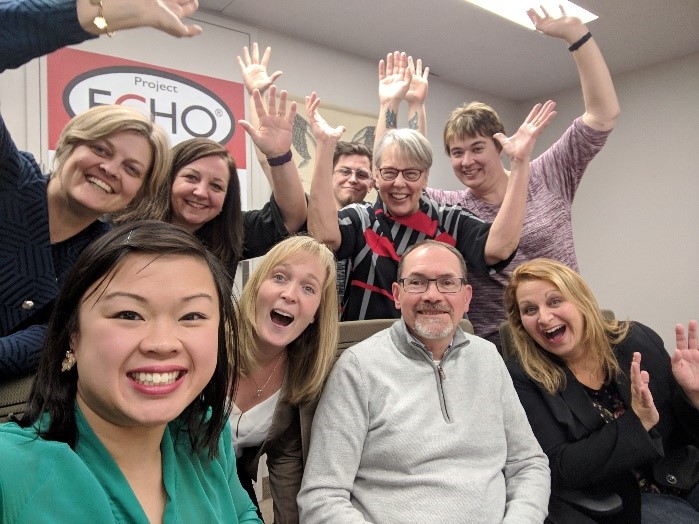
Group of people smiling and holding their hands in the air

Top Row: Dr. Simone Kortstee, Josée Blackburn, Daniel Peregrym, Dr. Kathleen Pajer and Roxanne MacKay

Bottom Row: Veronica Hoch, Cindy Dawson, Dr. Hazen Gandy and Ghyslaine Paquette

What we do

TMHS is a province wide program that provides one-time consultation for a diagnosis and treatment recommendations, as well as a professional consultations, program consultations and education.

Where we work

CHEO (Eastern Hib, SickKids (Central Hub) and Child-Parent Resource Institute (Western Hub) provides TMHS to designated mental health practitioners performing the role of a mental health service provider and who is affiliated with a publicly funded agency.

Who we see

The program helps children and youth up to 18 years of age who reside in a rural, remote and/or underserved area and who have identified mental health needs.

How to access

The most responsible mental health practitioner must fill out the referral package and forward it to one of the 6 TeleMental Health Coordination Agencies. The referral will be sent to the centralized Intake at SickKids and triaged to one of the three hubs in the province. The consultation occurs via videoconferencing of the Ontario Telehealth Network (OTN).

For more information, view SickKids' TeleMental Health referral forms.

Looking for more resources or supports?
Visit our online resource section to learn about mental health resources and supports in the region, and access CHEO recommended websites, videos and more.

Mental health resources

Contact Us

City Hall
123 Conestoga Drive
Glasgow G1 5QH

111-222-3333
mail@example.com

Sign up to our Newsletter

Stay up to date on the city's activities, events, programs and operations by subscribing to our eNewsletters.